On this page (5 sections)
One terminal, not two
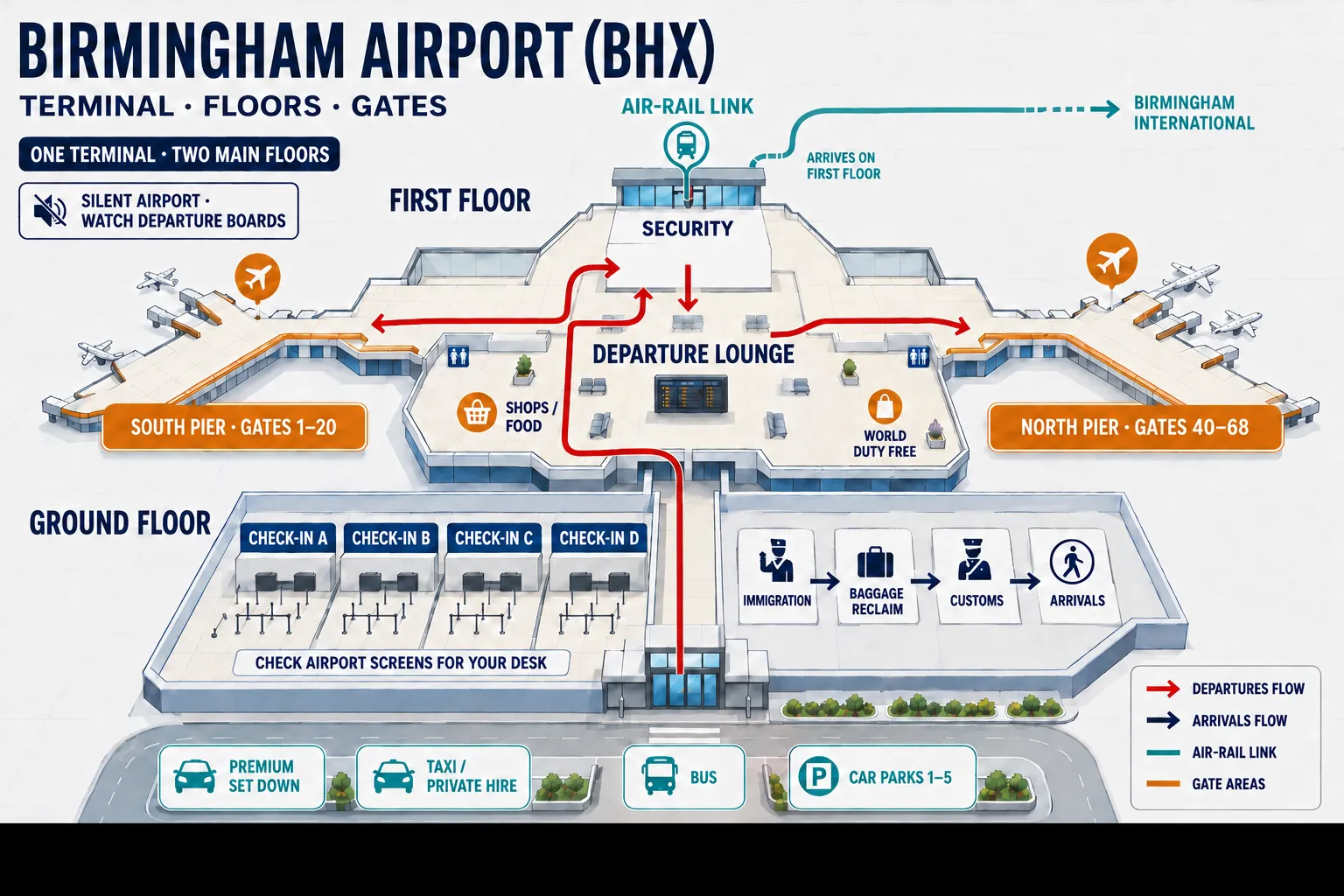
The first thing to settle, because it is the thing people arrive here asking: Birmingham has a single terminal, and there is no Terminal 1 or Terminal 2 to choose between.
Birmingham Airport has one terminal. Every airline checks in there, every flight leaves from it and every arrival comes back into it, so there is no terminal to pick, no wrong building to be dropped at and nothing to look up before you set off. It is a quiet advantage of flying from here: the decision that eats the first ten minutes of most airport trips does not exist at BHX. If a booking, a car park sign or a set of directions names the terminal, it is naming the only one there is.
The reason the question keeps being asked is that Birmingham used to have two. If you have seen Terminal 1 or Terminal 2 mentioned, in an older article, on a forum, or from someone who last flew from here years ago, they are describing an airport that no longer works that way: the two buildings were joined into the single terminal you walk into today. The one trace left is the gate numbering, which still jumps from 20 to 40 with nothing in between, and that is explained further down.
Ground floor: check-in and arrivals
Walk in at street level and you are in the check-in hall; arrivals empties out at the same level a few doors along.
The ground floor is where the airport meets the outside world. The check-in desks run through zones A to D, the entrance doors outside are signed A to C by airline, and the flight information screens just inside list the live desk numbers, which matters because allocations move; the check-in guide covers the zones, the opening times and the day-before bag drop. Along the same floor sit the practical counters: the Assisted Travel desk between Costa and SPAR for assistance and Sunflower lanyards, Luggage Point for left luggage and lost property, and a Travelex for currency at the north end of the hall.
Arrivals is the other half of the ground floor. Passengers landing come down through passport control into baggage reclaim and out through customs into the arrivals area, where the meeters, the greeters and a Costa wait. There is one multi-faith prayer room on this side of security, with a second airside. If you are collecting someone, the live arrivals board tells you when to set off; the terminal itself will not announce anything.
First floor: security and the departure lounge
One escalator ride up is the whole airside world: the security hall, then a single departure lounge every flight shares.
Departing, everything funnels up from the check-in hall to the first floor, where the security hall sits between you and everything else. It is one hall for every flight, rebuilt in 2024 around scanners that let liquids and laptops stay packed. On the far side, the walk to the gates leads straight through World Duty Free and into the departure lounge, where the shops, bars, restaurants and lounges cluster; the shop, eat and relax hub maps that floor in detail, from the Wetherspoon to the Emirates Lounge.
The departure lounge is also where Birmingham's one behavioural rule applies: it is a silent airport, with no boarding calls, so the departure boards are the only signal to move. A Travelex bureau sits airside for last-minute currency, a Boots stocks the forgotten toiletries near gates 1 to 20, and the second prayer room is on this side of security. Keep half an eye on the departures board and the layout does the rest.
The gates and the missing numbers
Gates 1 to 20 south, gates 40 to 68 north, and nothing numbered in between: the two piers are the ghost of two old terminals.
From the departure lounge, the gates split down two piers. The South pier carries gates 1 to 20, the North pier gates 40 to 68, and the numbering gap in the middle is not a puzzle but a leftover: the building absorbed what were once two separate terminals, and the piers keep their old ranges. In practice the number on the screen is a walking forecast. South pier gates are around 10 minutes from the middle of the lounge, and the far end of the North pier deserves up to 15, so a gate in the 60s is a reason to finish the coffee early.
Two habits make the piers painless. First, wait for the boards to name the gate before you commit to a direction, because the two piers point opposite ways and there is no shortcut between their far ends. Second, budget the walk on top of the boarding time, not instead of it: with no announcements, the interval between the gate appearing and the gate closing is yours to manage. The facilities guide covers what help exists if walking is the problem, including buggies and assistance.
Around the outside
The station monorail, the bus stands and the drop-off points all plug into the same short stretch of kerb.
The airport's front door faces its transport. The Air-Rail Link monorail connects the terminal to Birmingham International station, the way in for every train passenger, and the free ride takes about 90 seconds each way; the train guide covers it. Buses and coaches stop immediately outside the terminal, taxis rank by arrivals, and the transport hub compares every way in and out. Driving, the set-down choice is between the paid set-down lane by the terminal and the free-with-a-walk drop-off car park, which the drop-off guide prices honestly, and the car parks ring the site at walking distances the parking hub lists per car park.
Beyond the kerb, the neighbours are part of the map too: Birmingham International station sits across the monorail, and the NEC and Resorts World complex is effectively next door, close enough to fill a long layover; the things to do guide covers the hop. For anything inside the building this page has not placed, the full facilities guide is the index.