On this page (5 sections)
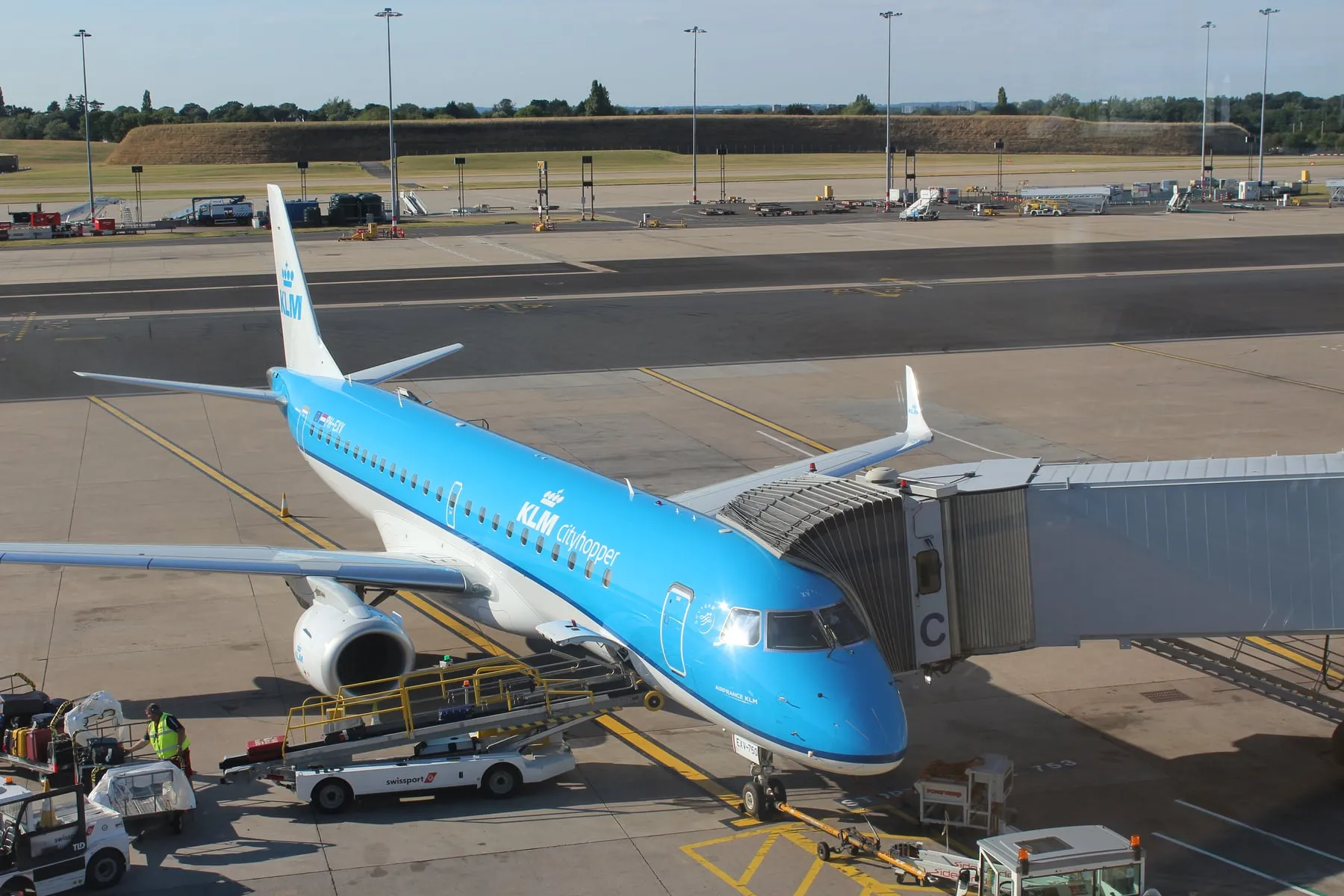
One terminal, two floors
There is no which-terminal puzzle at Birmingham: one building, two floors that matter, and every gate off a single departure lounge.
Everything at the airport starts on the ground floor. The check-in desks line the hall you walk into, arrivals and the baggage reclaim empty out at the same level, and the help desks, left luggage and currency counters sit between them. Flying out, the way up is one escalator ride: security is on the first floor, and beyond it a single departure lounge serves every flight. The lounge splits into two piers at the gate end, with gates 1 to 20 on the South pier and gates 40 to 68 on the North, and some gates are a fair walk from the shops, so the airport map is worth a look before a tight connection or a late dash.
One habit matters more here than at most airports: watch the screens. Birmingham is a silent airport, so there are no boarding calls over a tannoy; the departure boards are the only warning you get, and the same is true for anyone tracking a landing on the arrivals screens downstairs. Give yourself a time budget for the walk once your gate appears, especially for the far end of the North pier. What fills the wait on the airside floor, the duty free, the restaurants and the lounges, has a hub of its own.
Getting through departures
Check-in, the security queue and the liquids rule are where a trip is won or lost; this is the current state of each.
Desks usually open 2 to 3 hours before a short-haul flight and about 4 hours before long-haul, and the airline's stated time beats any rule of thumb. If you are travelling with Jet2, easyJet, Ryanair or TUI, you can often drop your bag the evening before an early flight, and anyone who has checked in online with nothing to drop should skip the ground floor entirely and head straight for the security queue upstairs. The check-in guide covers the zones, the opening windows and the day-before bag drop airline by airline; what your ticket lets you carry is a separate question, answered in the baggage guide.
Security itself is more forgiving than it used to be. The scanners here read bags in 3D, so laptops and liquids stay packed, and the liquids rule is now containers up to 2 litres rather than 100ml, with no limit on the number and no plastic bag required. Do not plan the return leg around it though: plenty of airports you fly back from still hold the 100ml line, and anything oversized there is binned at the belt. Queues move in waves with the early departure banks, and if a queue would sink your morning, the Express Lane costs £7 pre-booked on the airport's own website, brings children aged 4 and under through free, and is only sold by the airport and its airline partners, so a cheap ticket from a reseller site simply will not scan at the lane.
Arriving and going home
The border is quick for most passports, customs is a choice of two channels, and if something goes missing there is a fixed route to get it back.
Landing at Birmingham puts you through passport control on the way to the baggage hall. The eGates take biometric passports from the UK, the EU, the US and a list of other countries, for travellers aged 8 and over, provided anyone between 8 and 17 is with an adult and everyone is at least 120cm tall. Visitors who do not need a visa now need an Electronic Travel Authorisation arranged before they fly, £20 and valid for two years. After the bags, customs is the familiar pair of channels, green for nothing to declare and red when you are over the allowance, and the allowances are more generous than most people think.
Anything left on a plane or in the terminal ends up with Luggage Point, which runs lost property from the ground floor. Everything found is logged in an online database you can search from home, and a retrieval fee applies unless you are back within 30 minutes; prescription medicines and children's toys are returned free. The lost property guide walks through the search, the fees and the postal option. If you are the one doing the collecting rather than the travelling, the live arrivals board is the thing to check before leaving the house.
Help, access and comfort
The unglamorous facilities are the ones that save a trip: help booked ahead, wifi that costs nothing, and somewhere to leave a bag or change your money.
Assistance works best arranged early. Book it with your airline, ideally when you book the flight and no later than 48 hours before you travel, and the airport's assistance team meets you from there. Travellers with hidden disabilities can collect a Sunflower lanyard from the Assisted Travel desk on the ground floor, between Costa and SPAR, and need to register at that desk before heading to security. The special assistance guide covers the booking rules, the desk and what support looks like on the day, and it pairs with the Blue Badge parking guide if you are driving in.
The everyday facilities are straightforward. Wifi is free across the terminal on the BHX Free WiFi network, in 30-minute sessions you renew as often as you like. Luggage storage is Luggage Point in the check-in hall, from £8 a bag a day by size, for a few hours or up to three months. Changing money, Travelex runs a landside counter in the check-in hall from 04:00 to 21:00 and an airside bureau in the departure lounge from 04:00 to 22:00, and ordering online for collection beats the walk-up rate. Two multi-faith prayer rooms sit either side of security. Smoking is the strictest rule in the building: nowhere inside, only the marked areas outside the front doors, and nothing at all once you are through security.
Overnight, spotting and next door
A dawn flight, a plane-mad child or a long gap between flights: the useful answers sit at the edges of the airport.
Before a very early departure, the honest choice is between a night in the terminal and a bed a few minutes away. Sleeping at the airport is legal and common but hard work, with bright lights, rolling cleaning and precious few flat surfaces, and the airport hotels, four of them within walking distance of check-in, turn the same 04:00 start into something civilised. Watching the planes rather than catching one is free: the viewing spot by Sheldon Country Park sits at the north end of the runway, a short walk from Marston Green station, and the viewing area guide covers how to reach it and what you will see.
A long layover or a spare afternoon does not have to be spent in the terminal. The NEC and Resorts World, with its shops, restaurants, cinema and casino, are effectively next door, and the things to do guide ranks what is worth the hop for the time you have. It is the rare airport where the best-value meal and the best hour with restless children are both a few minutes outside the building.