On this page (7 sections)
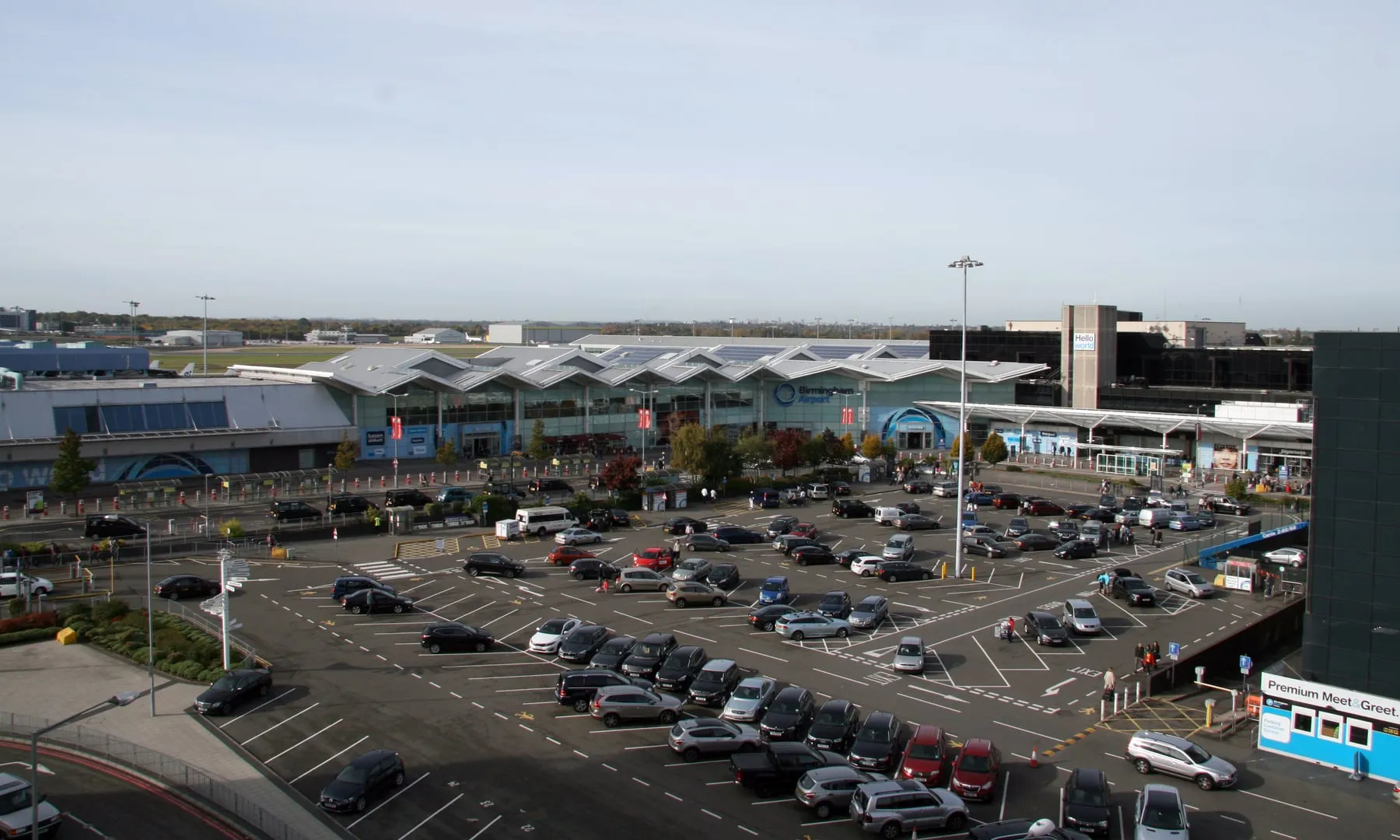
Every way, at a glance
Six practical ways in and out; the right one depends on where you start and what you are carrying.
Birmingham Airport transport comes in six practical shapes, and the choice usually settles itself once you know where you are starting from and how much luggage is coming with you. The airport's biggest advantage is its own railway station, Birmingham International, linked to the terminal by a free people-mover, which makes arriving without a car genuinely easy. Most passengers still drive, because the Midlands feeds the airport from every direction and a car with a family and a fortnight's bags is hard to beat, which is why parking and drop-off loom so large here. The table below sets the modes side by side; the sections under it go into each in turn.
| How you travel | Best for | Time and cost |
|---|---|---|
| Train and the Air-Rail Link | Anyone near a rail line, and city-centre trips | About 10 minutes from New Street, then a free 90-second link |
| Car | Families, early flights and heavy luggage | Junction 6 of the M42, then park or drop off (book parking ahead) |
| National Express coach | A fixed low fare direct from your own town | To the terminal door, from £3.80, about 25 minutes from the city |
| Taxi or private hire | Door to door, late at night or with lots of bags | Metered black cab at the rank, or a cheaper pre-booked car |
| Hire car | Driving onward once you land | Desks in arrivals, cars collected near Car Park 4 |
| Local bus | Short hops within the West Midlands | X1, X12 and more, contactless or cash on board |
Two facts anchor almost every trip. The terminal postcode for sat-navs is B26 3QJ, and by rail you always finish on the free Air-Rail Link rather than stepping off a train into the terminal itself. Keep both in mind and the rest is detail.
By train and the Air-Rail Link
Birmingham International is about 10 minutes from New Street; the free Air-Rail Link does the last 90 seconds to the terminal.
The train is the quickest way in from central Birmingham and the surrounding cities, and the piece that catches first-timers out is the last leg. Trains do not pull up at the terminal. They call at Birmingham International station, which sits across a short valley from the terminal, and the two are joined by the Air-Rail Link, a free automated people-mover that glides between the station concourse and the terminal in about 90 seconds. It runs roughly 03:30 to 00:30 every day, on demand, so you rarely wait more than a moment for a car.
From Birmingham New Street, the ride to Birmingham International is about 10 minutes, with something like seven trains an hour at the busy times. The station is on the West Coast Main Line and a regional hub, so several operators call there: West Midlands Railway and London Northwestern Railway for the local and regional runs, with CrossCountry, Avanti West Coast and Transport for Wales adding longer-distance services. That reach means a train from much of the Midlands, the North West, Wales and the South West can get you to within 90 seconds of check-in. Buy an ordinary rail ticket to Birmingham International; the Air-Rail Link costs nothing on top. The full rail picture, including fares, the onward reach and how the free link fits the rest of your trip, sits in the guide to the train and the Air-Rail Link.
By car
Junction 6 of the M42 onto the A45, sat-nav B26 3QJ, then decide between parking and dropping off.
Most people arrive by car, and the approach is the same wherever you start: leave the M42 at junction 6, join the A45 and follow the airport signs. Birmingham Airport sits in the middle of the motorway network, reached off the M6, M40 and M5 as well as the M42, which is a large part of why it draws drivers from right across the Midlands. Set your sat-nav to the terminal postcode B26 3QJ, or better still to the specific postcode of the car park you have booked, because each one has its own and the signs split early.
Once you are on site, the question is whether you are staying or just dropping someone. If the car stays, the airport's car parks range from a minute's walk at Car Park 1 to the cheaper long-stay sites a short shuttle ride out, and booking ahead is far cheaper than turning up. If you are only setting someone down, the drop-off options run from the free 10 minutes in the Drop Off Car Park to £7 for a quarter of an hour at Premium Set Down right outside the doors. Collecting an arrival is a job of its own, covered in the guide to picking someone up, because the timing and the free windows work differently. Electric drivers will find charging on site and a large public hub minutes away at the NEC; the driving guide has the detail.
By coach and local bus
National Express runs to the terminal door from across the country; local buses cover the West Midlands.
For a fixed fare booked in advance, the National Express coach is often the cheapest way in from further afield. Coaches set down and pick up at the terminal door, and direct services run from towns and cities all over the country. From Birmingham Coach Station in Digbeth the trip is about 25 minutes and starts from £3.80 booked ahead, running roughly hourly through the day and less often late at night. Coach fares move with demand and how early you book, so treat that figure as a starting point and check the live price. The same network also links the airport with Manchester, Heathrow, Stansted, Gatwick and Luton, which is the subject of the section below.
Closer to home, National Express West Midlands runs the local buses. The X1 connects the city centre and Coventry through the airport and the NEC, the X12 runs between Birmingham and Solihull, and the 17A, 97A and 96 add more of the surrounding suburbs; you pay on board by contactless or cash. Buses are the slow, cheap option, useful for a short hop within the West Midlands or for staff and locals rather than a flight with luggage. The bus guide lists the routes, the stops outside the terminal and where each one goes.
By taxi and hire car
A 24-hour black-cab rank sits outside arrivals; car hire desks are in the arrivals hall, with cars near Car Park 4.
A taxi is the simplest door-to-door option, especially late at night or with more bags than a train ride can hold. Licensed black cabs wait at the rank outside arrivals around the clock, on a metered fare shown in the cab, with staff on hand at busy times. Booking a private hire car ahead usually costs less than the metered rate for the same trip, so it is worth a call if you know your times. The taxi guide covers the rank, booking ahead and what shapes the fare, without pretending a single headline price fits every trip.
If you are picking up a hire car to drive on from the airport, the rental firms keep desks in the arrivals hall, with the cars collected from lots a few minutes' walk away near Car Park 4. Several of the big names operate here, and a shuttle covers the short gap to the collection point when one is needed. Rates and the exact line-up move about, so the car hire guide is the place for who operates at the airport and where you actually pick the keys up.
To the other UK airports
Ground links to Heathrow, Gatwick, Stansted, Luton and Manchester run mainly by coach, with rail via New Street.
Birmingham is a common starting point for a flight out of another UK airport, whether a fare or a schedule sends you south to London or north to Manchester. The most direct ground link is the coach: National Express transfer services run between Birmingham Airport and Manchester, Heathrow, Stansted, Gatwick and Luton, arriving airport to airport without a city-centre change, with Heathrow served up to around 16 times a day. That saves dragging luggage across London on the Underground.
By rail the route runs through the city: a train from Birmingham International to Birmingham New Street, then an onward service, which is quicker to central London but means a change and often a cross-London hop to a London airport. The guide to reaching the other airports weighs coach against train for each one, with the journey times and the trade-offs, so you can see when the extra change is worth it.
Which way to choose
Train for the city and the rail-connected towns, car for families and early flights, coach for a fixed low fare.
If you are anywhere near a railway line, take the train. It is quick, it is unaffected by the A45 at rush hour, and it drops you 90 seconds from the terminal for the price of an ordinary rail ticket. For an early flight from within an hour or so of the airport, a car often wins, either parked on a pre-booked long-stay space or with someone dropping you at the kerb, because it goes door to door on your own timetable with all the bags. Weigh a lift and a free drop-off against the cost of leaving the car for a week; sometimes the lift is the whole answer.
Coming from further out, a National Express coach from your own town can undercut both, at the cost of a longer, less flexible trip. A taxi earns its keep for late arrivals, heavy luggage or a group splitting one fare, and a hire car makes sense only if you are driving onward once you land. Whatever you pick, the single biggest saving on the whole trip is usually booking parking early if you drive, so if the car is the plan, sort the car park as soon as your dates are firm.